

 English
 русский
 عربى
عربىGrowing demand for flexible power distribution has pushed engineers and developers to rethink how substations are deployed across different environments. A compact transformer substation is often evaluated together with a unit substation transformer solution when determining how to deliver electricity efficiently across diverse application scenarios. Each approach serves specific operational needs, and understanding where compact substations perform effectively helps optimize both investment and long-term system performance.
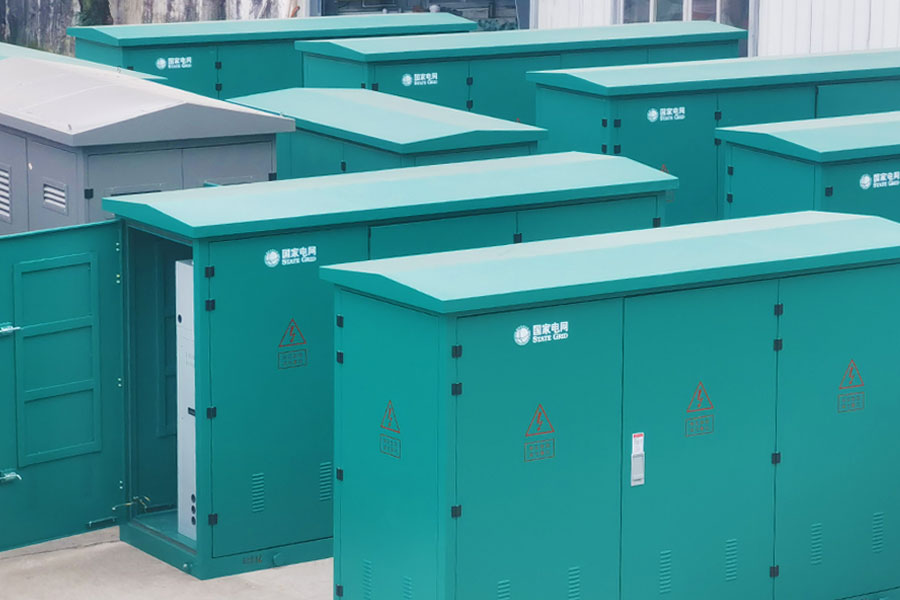
Compact substations are designed as integrated systems that combine transformer, medium-voltage switchgear, and low-voltage distribution equipment into a single enclosure. This structure allows them to operate reliably in environments where traditional substations would require more space and longer construction cycles . Their adaptability makes them suitable across multiple industries and infrastructure types.
Urban Infrastructure and Public Utilities
Dense urban environments present one of the more common use cases for compact substations. Space limitations, aesthetic requirements, and safety considerations all influence equipment selection.
Key Characteristics:
Limited installation space
High load density
Strict safety and enclosure requirements
Compact substations address these challenges through:
Fully enclosed, weather-resistant structures
Small footprint suitable for roadside or embedded installation
Reduced visual impact in residential or commercial areas
Typical applications include:
Residential communities
Shopping malls
Office complexes
Street-level distribution networks
Urban planners favor compact transformer substations because they can be deployed close to load centers, reducing cable length and improving distribution efficiency.
Industrial and Manufacturing Facilities
Industrial plants require stable and scalable power systems. While unit substation transformer configurations are often used for customized layouts, compact substations are increasingly applied in medium-scale industrial environments.
Suitable Conditions:
Moderate power demand
Limited available land within factories
Need for quick installation
Advantages in industrial use:
Pre-assembled design reduces on-site construction
Simplified integration into existing electrical systems
Lower civil engineering requirements
Typical installations:
Production workshops
Warehousing facilities
Processing plants
Compact substations are especially useful in facilities undergoing expansion, where additional power distribution must be added without major redesign of the electrical system.
Renewable Energy Projects
Renewable energy installations often operate in remote or distributed locations, making compact and transportable solutions highly valuable.
Application Areas:
Solar photovoltaic farms
Wind power stations
Energy storage systems
Compact substations support these projects by:
Providing plug-and-play deployment
Reducing transportation and installation complexity
Supporting decentralized grid structures
Their integrated design aligns with the trend toward modular energy infrastructure, where systems are built and deployed rapidly to meet growing energy demands .
Construction and Temporary Power Supply
Construction sites require temporary but reliable power distribution systems. Traditional substations are not practical due to time constraints and mobility requirements.
Compact substations are widely used in:
Large construction projects
Infrastructure development sites
Temporary industrial operations
Key benefits:
Easy relocation
Fast commissioning
Minimal site preparation
These features make them suitable for short-term applications where flexibility is essential.
Commercial Buildings and Data Centers
Modern commercial facilities demand uninterrupted and stable power supply. Compact substations can be integrated directly into building infrastructure.
Common Use Cases:
Data centers
Hospitals
Hotels
Retail complexes
Advantages:
Reduced installation footprint within building premises
Quiet operation suitable for indoor or semi-indoor environments
Integrated protection and monitoring systems
Their ability to combine multiple electrical functions into a single enclosure simplifies system design and improves operational reliability.
Remote and Harsh Environments
Remote locations such as mining sites, oil fields, and rural electrification projects require robust and self-contained power solutions.
Compact substations are particularly effective in these scenarios due to:
Enclosed, weather-resistant design
Protection against dust, moisture, and corrosion
Minimal maintenance requirements
Applications include:
Mining operations
Oil and gas extraction sites
Rural electrification projects
Their sealed structure and integrated protection systems allow operation in challenging environmental conditions .
Comparison with Unit Substation Applications
Although compact substations are versatile, unit substation transformer systems remain more suitable in certain cases.
Unit Substation Advantages:
Flexible configuration for large-scale facilities
Easier expansion and customization
Higher capacity applications
Compact Substation Advantages:
Space-saving design
Faster installation
Lower infrastructure requirements
Unit substations are typically applied in:
Large industrial complexes
Heavy manufacturing plants
Facilities requiring complex distribution networks
Compact substations, on the other hand, are preferred where space, speed, and modular deployment are priorities.
Manufacturer Insight on Application Trends
Application demand continues to shift toward modular and compact solutions. Qinghang Electric Co., Ltd. has observed increasing adoption of compact substations in urban distribution, renewable energy, and commercial construction sectors.
Design improvements supporting these applications include:
Enhanced enclosure protection (IP54–IP65)
Integrated smart monitoring systems
Modular internal layouts for different load profiles
These advancements allow compact substations to adapt to a wider range of environments without compromising safety or performance.